top of page
Wildlife and Domestic Charity Funding

Bluff Beach In Bocas del Toro
Playa Bluff was declared a Municipal Nature Reserve in 1997 and is one of four major leatherback nesting beaches in Bocas del Toro, forming part of the largest leatherback nesting population in Central America. However little to no funding is received to monitor or protect the beach. STC has had one monitor this season paid for by the Bluff community.
-
Hawksbill/Carey — Eretmochelys imbricata— Critically Endangered (CR) globally
-
Leatherback Turtle (Dermochelys coriacea) — Vulnerable (VU) globally.
-
Loggerhead Caretta carettaVulnerable — Vulnerable (VU) rarely witnessed and recorded in Bluff
-
Green Turtle— Chelonia myda — Least Concern (LC)
A 2025 peer-reviewed study found that leatherback nesting at Bluff Beach has declined by approximately 8.8% every year between 2002 and 2022.
Some Statistics:
STC's own climate-change project in Bocas del Toro specifically investigated: Erosion, flooding, groundwater, nest temperature, nest survival and relocation to higher ground.
During the study, STC relocated: 86 Leatherback nests, 6 Hawksbill nests and 2 Loggerhead nests
to higher ground. They later reported that the relocated nests had higher hatching success than nests left in place.The conclusion that relocation to higher ground could be a useful strategy against increasing erosion, flooding and poaching.
THE PROPOSITION
Natural-Sand Emergency Nesting Sanctuary
Vulnerable eggs would be relocated into properly prepared natural-sand nests within a fenced area above the high tide erosion/flood zone. This strategy preserves as much of the natural incubation environment as possible while removing the immediate catastrophic risk. The nesting sanctuary will be monitored 24/7 and protected from predators and poachers.
We would like to propose a Natural sand nursery on Bluff to MiAmbiente and STC and establishing a safe Natural sand Nesting site and help save these majestic creatures for future generations. The approximate costs for setting up the nursery and training of staff is around $34000.00. Much of this can be sponsored through Fundación Natura that manages conservation funding in Panama and specifically has programmes allowing private companies to participate in conservation projects through Corporate Social Responsibility (RSE). Operational cost may still need to be community funded so please consider donating to saving these majestic creatures for future generaitons.
2011–2022 scientific trend → 2026 field evidence → 2027 intervention proposal.
The 2025 paper itself says that continued monitoring and increased protection from government agencies and communities is essential.

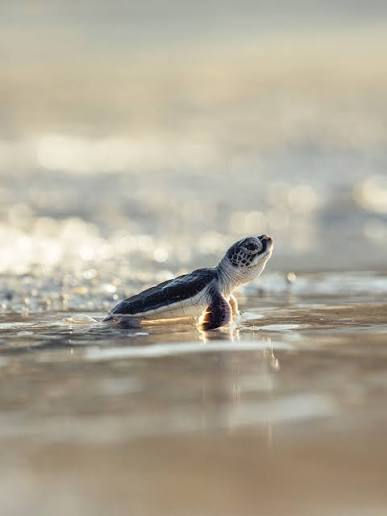
Turtle Conservation
Panama is particularly significant because five of the world's seven marine turtle species occur in Panama, and more than 200 Panamanian beaches are recognized as turtle nesting sites.
.jpg)
.jpg)

Bocas del Drago Turtle Nesting Beach
Bocas del Drago is a relatively recently documented sea turtle nesting site on the northern part of Isla Colón. Sea Turtle Conservancy (STC) identified it as a previously unstudied nesting beach for Leatherback (Dermochelys coriacea) and Hawksbill/Carey (Eretmochelys imbricata) turtles, both globally important conservation species.
STC describes the area as including a short white-sand nesting beach with coral reef habitat offshore, where juvenile and sub-adult Hawksbills appear to forage while adult Hawksbills and Leatherbacks come ashore to nest.
STC began a structured monitoring and protection programme at Drago in 2021. The programme covered approximately 4 km of coastline — about 2 km of Drago Beach and a further 2 km comprising smaller beaches in the Mimitimbi area. Local community members were trained to conduct daily track surveys and night patrols, under STC supervision.
During the 2021 programme, 91 nests were specifically marked for hatching and emergence studies: 18 Leatherback and 73 Hawksbill nests. The programme also documented threats including poaching, dog predation and erosion-related nest loss. STC responded by protecting vulnerable nests and working with the local community, including a dog-neutering programme. The Drago project explicitly recorded erosion as a cause of nests failing to complete incubation.
THE PROPOSITION
Natural-Sand Emergency Nesting Sanctuary
Since Drago nesting turtle sites are found all along the Drago, Mimitimbi coastline we propose a network-based conservation programme—protect turtles and nests where they occur, with a small emergency relocation area available only when necessary. A permanent, distributed nesting-beach monitoring and rapid-response programme designed to protect nests and nesting females across the fragmented Drago–Mimitimbi coastline. STC's previous Drago programme already trained a local monitor and research assistants in turtle biology, species identification, tagging, measurements and nest marking. That provides a direct precedent for restarting or expanding a local guardian programme.
For nests threatened by dogs, accidental disturbance, or other localized threats, use in-situ protection, such as approved mesh/screens or other methods specified by STC and MiAmbiente, STC has already done this successfully at the Drago/Mimitimbi beach sites and protected them in this way.
Create a mobile rapid-response team, 2 trained turtle monitors + transport + communications that could respond to nests anywhere along, Drago → Mimitimbi → the smaller isolated beaches. Their job would be to assess each nest, A permanent, distributed nesting-beach monitoring and rapid-response programme designed to protect nests and nesting females across the fragmented Drago–Mimitimbi coastline. STC's previous Drago programme already trained a local monitor and research assistants in turtle biology, species identification, tagging, measurements and nest marking. That provides a direct precedent for restarting or expanding a local guardian programme.
Some of this could potentially be sponsored through Fundación Natura that manages conservation funding in Panama and specifically has programmes allowing private companies to participate in conservation projects through Corporate Social Responsibility (RSE). Some operational cost may still need to be community funded so please consider donating to saving these majestic creatures for future generaitons.
.jpg)
_edited.jpg)


bottom of page